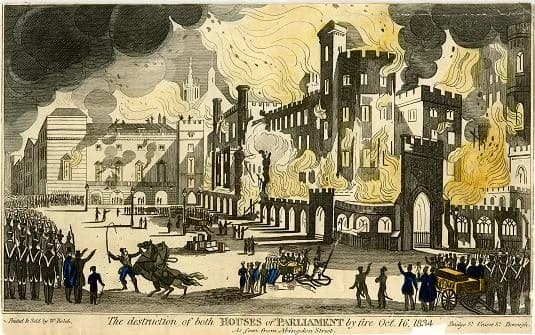
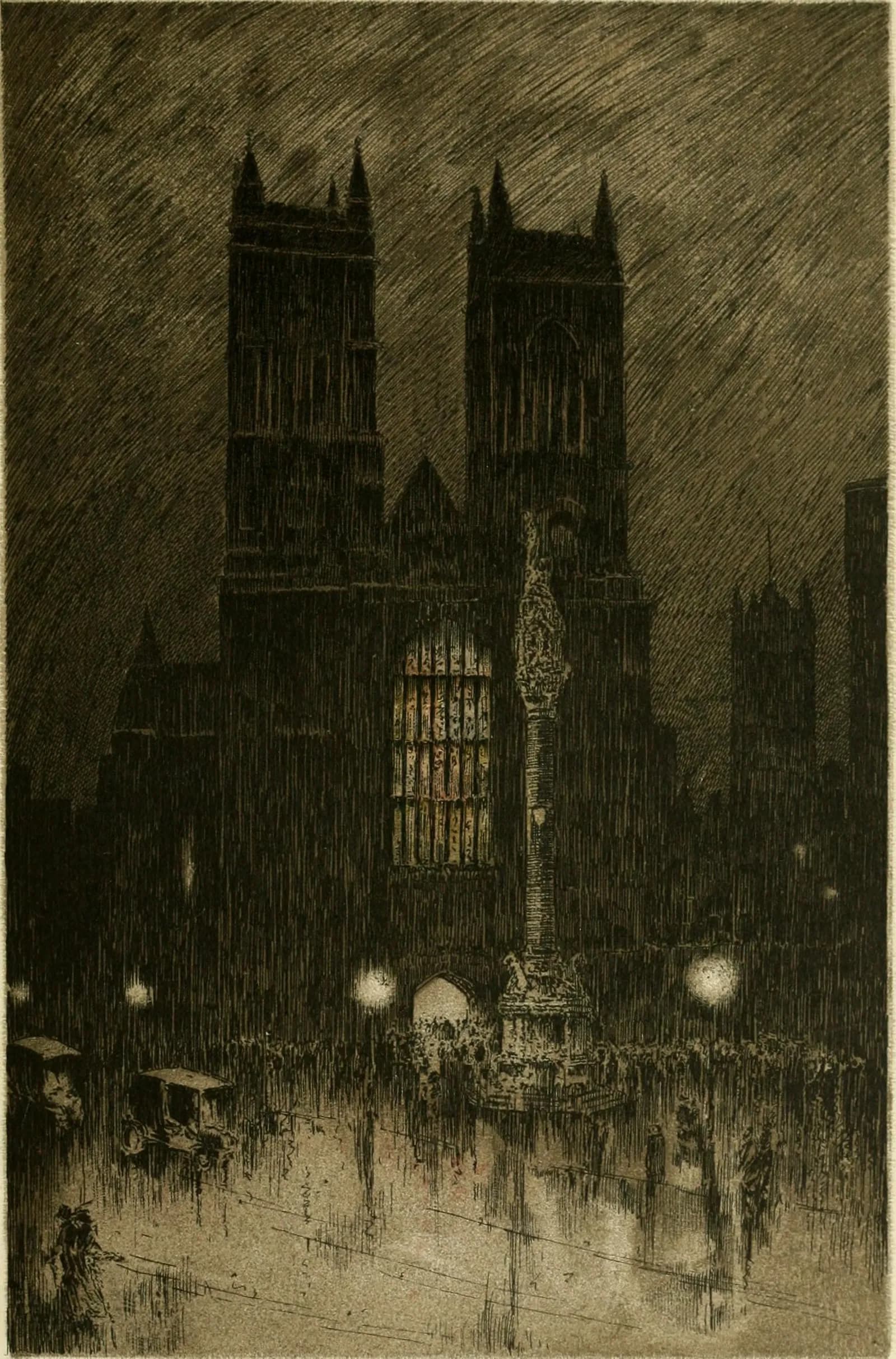
In the shadow of Westminster Abbey, barely a stone's throw from the Houses of Parliament, lay one of Victorian London's most notorious slums. The Devil's Acre, a roughly square block bounded by Dean, Peter, and Tothill Streets as well as Strutton Ground, existed as a stark counterpoint to the grandeur surrounding it.
How the Name Stuck
The term "Devil's Acre" entered the popular lexicon through Charles Dickens, who published an account of the area in the first edition of his magazine Household Words in 1850. Having worked as a parliamentary reporter in the early 1830s, Dickens knew Westminster intimately. He described it as "the most deplorable manifestation of human wretchedness and depravity" and noted that "the blackest tide of moral turpitude that flows in the capital rolls its filthy wavelets up to the very walls of Westminster Abbey."
Cardinal Wiseman, writing in the same year, called the area the "original" slum; his use of the word "slum" in this context helped popularise the term itself.
A Refuge for the Desperate
The area's character was partly shaped by medieval history. Land outside Westminster Abbey had been designated a sanctuary by decree of Edward the Confessor, meaning criminals and debtors were safe from the law within its bounds. For centuries, this sanctuary status made the neighbourhood a magnet for the desperate and the disreputable.
The geography did not help matters. The Devil's Acre sat on what was originally Bullinga Fen, a swampy, waterlogged area on the ancient course of the River Tyburn, within the Thames floodplain. The low-lying land was prone to dampness and disease.
Life Inside the Acre
By 1850, the Devil's Acre was considered one of the worst areas in London. Rooms were shared by up to twelve people; the 1861 census for Old Pye Street recorded a single lodging that housed more than 120 people. The 1876 records show 459 people living in just eighteen lodging houses in the area.
Housing consisted of cottages crammed together alongside stables, cowsheds, coal yards, and lodging houses. The homes were small and poorly ventilated, severely overcrowded, and sanitation was virtually nonexistent.
Cardinal Wiseman described the conditions thus: "Haunts of filth, which no sewage committee can reach – dark corners, which no lighting board can brighten." The atmosphere, he wrote, was "typhus, whose ventilation is cholera." The area was one of those hardest hit by cholera outbreaks, and infant mortality rates were abysmal.
Crime and the "School of Fobology"
Crime was endemic. According to some reports, up to half the population engaged in thieving. The One Tun pub in Old Pye Street operated as a "training ground for pickpockets," where a Fagin-like master taught children what was known as the "art of pick pocketing" – a practice so notorious it was given the name "School of Fobology." Dickens scholars believe the One Tun may have been an inspiration for Fagin's den in Oliver Twist.
John Hollingshead, a contemporary chronicler, described Old Pye Street as "an openly acknowledged high street of thieves and prostitutes" where "there is nothing for the barefooted children to stand upon but the black, damp, uneven earth." Frederic Farrar noted that "the whole street drank hard while such plunder lasted."
Police made only rare visits to the area; when they did come, local inhabitants vigorously repelled them. It was, in effect, a no-go area for law enforcement.
The Contrast That Shamed a Nation
What made the Devil's Acre particularly shocking to Victorian sensibilities was its proximity to power. As Dickens observed: "The law-makers for one seventh of the human race sit, night after night, in deliberation, in the immediate vicinity of the most notorious haunt of law-breakers in the empire."
The area represented what Dickens called the "chequered aspect" of Westminster: "The most lordly streets are frequently but a mask for the squalid districts which lie behind them." Westminster Abbey's towers were visible from any point within the Acre, serving as a constant reminder of the gulf between the sacred and the profane.
Clearance and the Victoria Street
The 1845 Westminster Improvement Act enabled slum clearances, but the decisive intervention came in 1851 when Victoria Street was driven through the area. The new thoroughfare pierced through the centre of the slums, demolishing over 3,000 homes in the process.
By 1902, Walter Besant and Gerald Mitton could note that on Old Pye Street, "a few squalid houses with low doorways remain."
The Peabody Legacy
In 1862, the American financier and philanthropist George Peabody gave £150,000 for the construction of model dwellings for the poor. The Abbey Orchard Estate was built in 1882 on the site of the Abbey's medieval orchard, and Peabody had to re-house 1,700 people in the process.
The Peabody housing blocks replaced the remaining slums with what were considered more salubrious dwellings, though critics noted that the model housing often excluded the "very poor" who had previously lived in the area, sometimes worsening their plight rather than helping it.
Joseph Bazalgette's sewage system, constructed after the Great Stink of 1858, included the Thames Embankment, which finally separated the area from the river and improved sanitation.
What Remains Today
Old Pye Street still forms the backbone of the area. The Peabody housing blocks of the Abbey Orchard Estate remain standing and functional today. A gabled block known as Perkins Rents still stands, giving a tangible link to the past.
On the southern side of Old Pye Street, a plaque remembers the One Tun pub, noting that it was later converted into a ragged school. St Matthew's Church and Schools, built between 1849 and 1857, now stand on the site of what was once Duck Lane.
The area today is, as one commentator puts it, "a quiet, mostly residential place, devoid of filth and dark corners." But the story of the Devil's Acre remains a powerful reminder of how Westminster, for all its grandeur, once hid some of the worst poverty in the empire within plain sight of its greatest institutions.